Detensioning and Razing a Post-Tensioned Parking Garage at GBMC
Structural Engineering. Robotic Demolition. Precision Saw Cutting.A Technically Demanding Teardown, Start to Finish
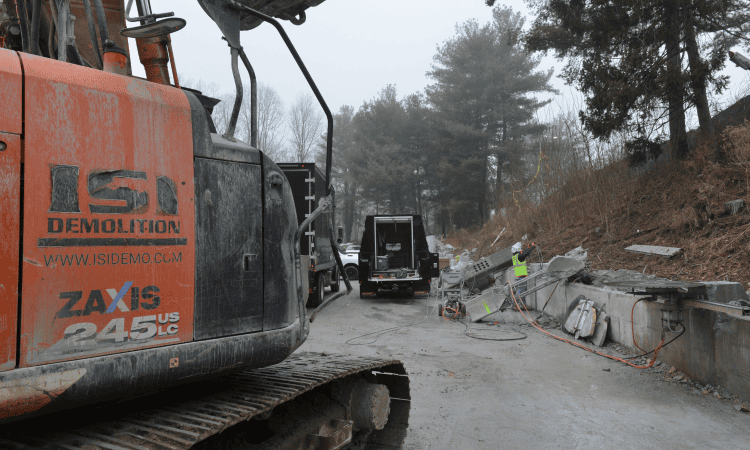
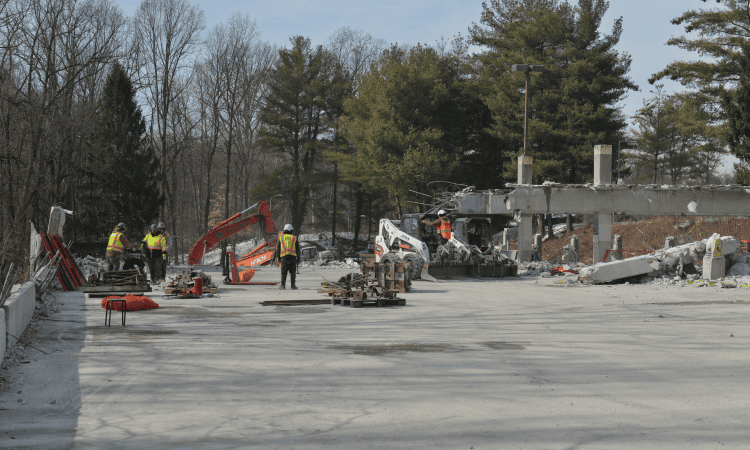
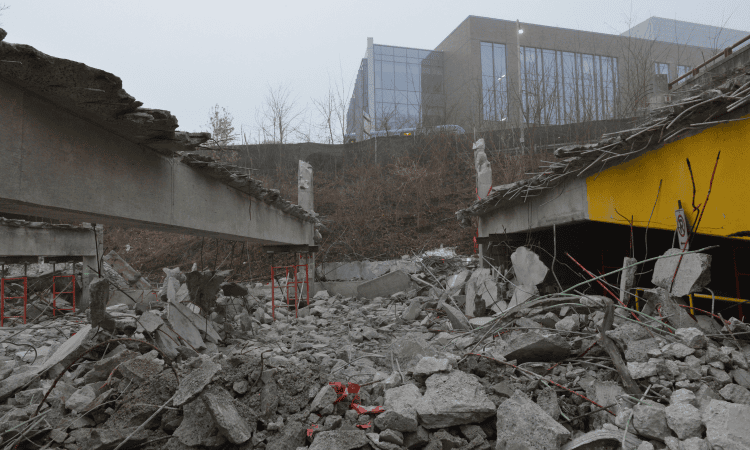
ISI Demolition led the full raze of the Daffodil Parking Garage at Greater Baltimore Medical Center (GBMC) in Towson, MD, working under DPR Construction Company, a commercial general contractor and construction management firm.
The project was a coordinated effort between ISI Demolition and Concrete Protection & Restoration (CP&R), a specialty subcontractor brought in at GBMC’s recommendation to handle detensioning and shoring tower work. Built in 1976 with a 1993 addition, the structure was closed in June 2023 and removed to make way for surface parking.
PROJECT SNAPSHOT
- Location: Greater Baltimore Medical Center (GBMC), Towson, MD
- Construction Manager: DPR Construction Company
- Original construction: 1976, with a 1993 addition
- Demolition timeline: November 2025 to April 2026
- Concrete removed and crushed in-house: 12,900 tons
- MBE participation: 21%
- Services: Structural Demolition, Structural Engineering, Shoring & Bracing, Saw Cutting, Robotic Demolition
Detensioning Post-Tensioned Concrete
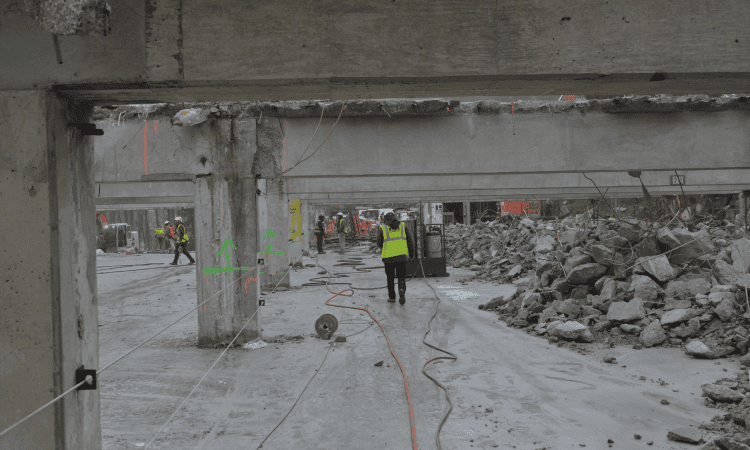
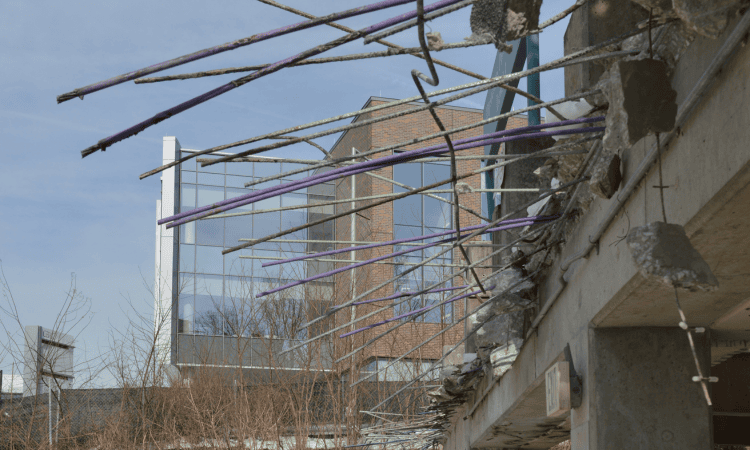
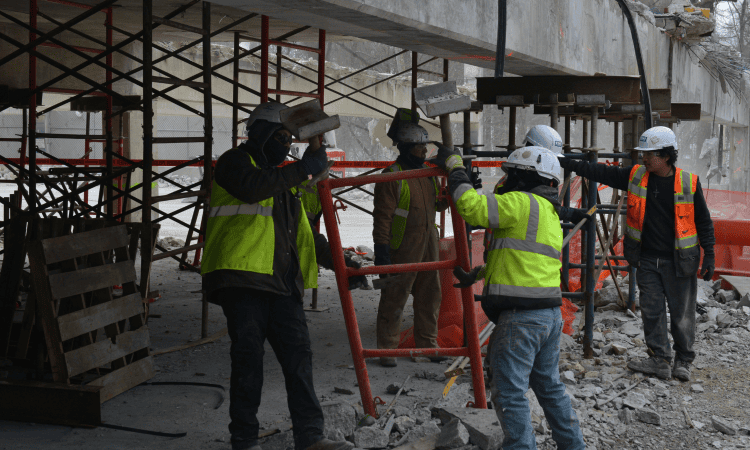
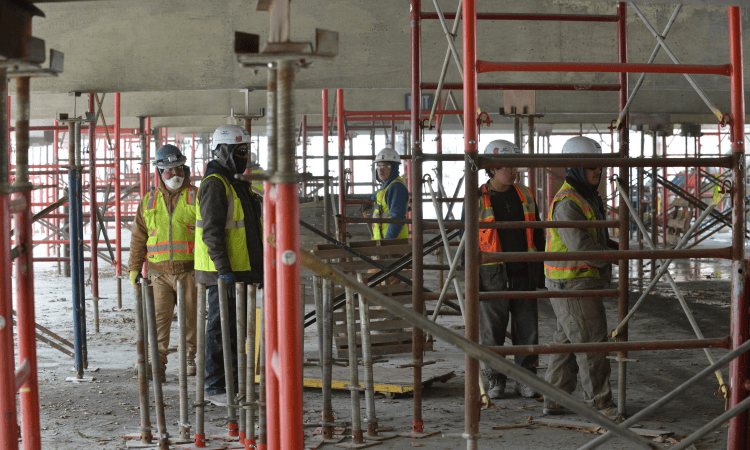
The Daffodil Garage’s decks were post-tensioned, meaning steel cables running through the concrete carried structural load under tension.
Matching Equipment to the Task
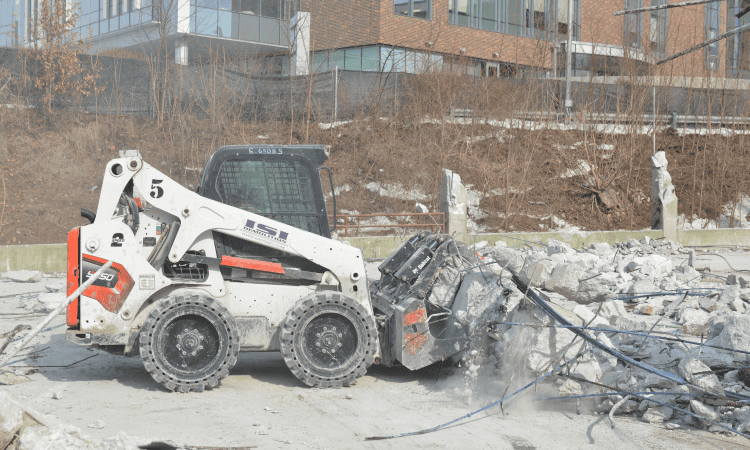
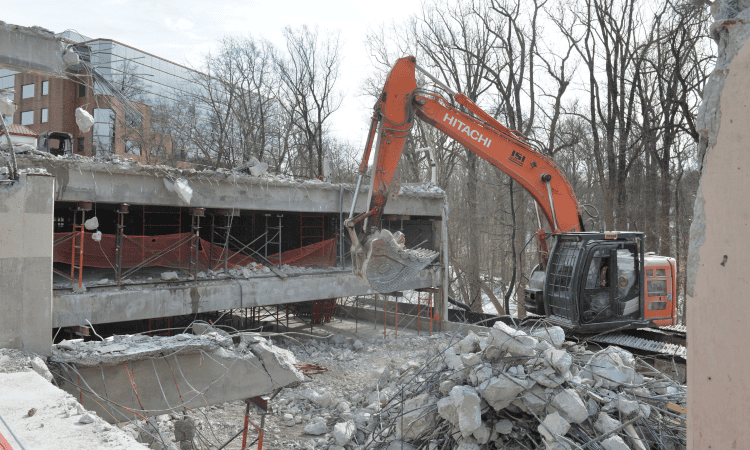
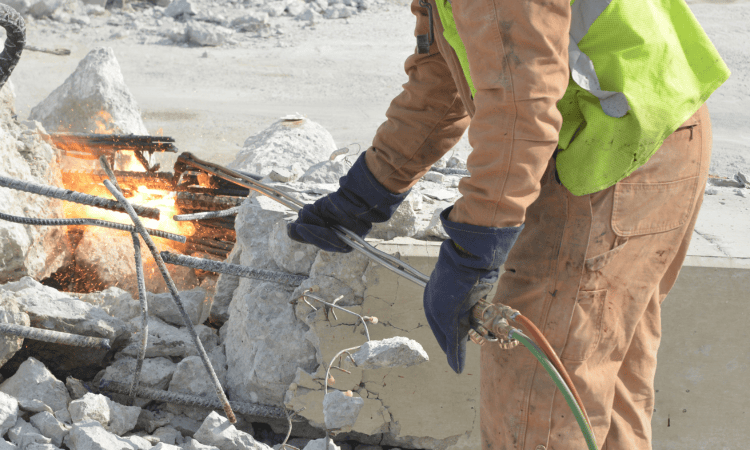
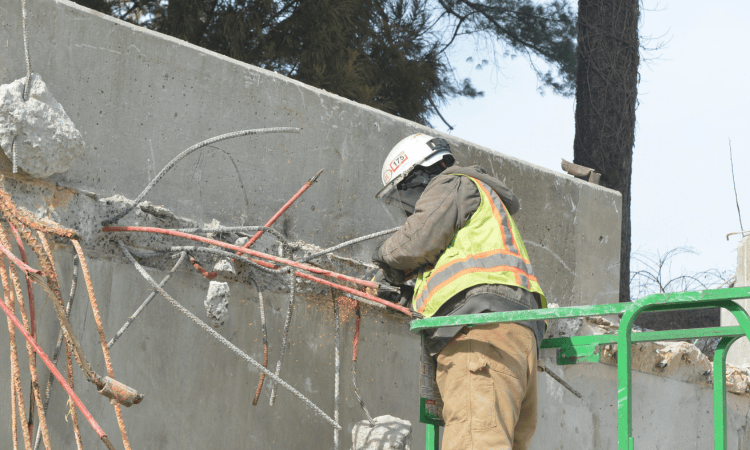
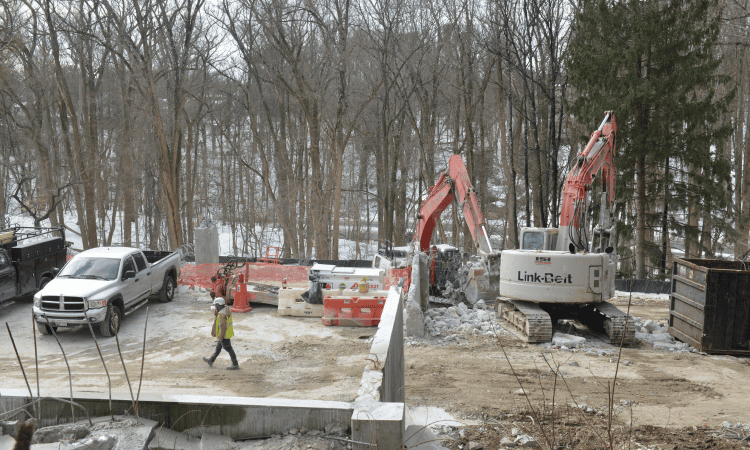
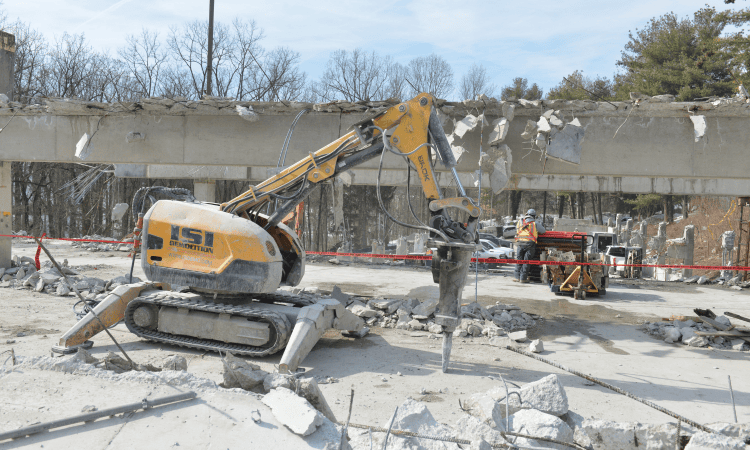
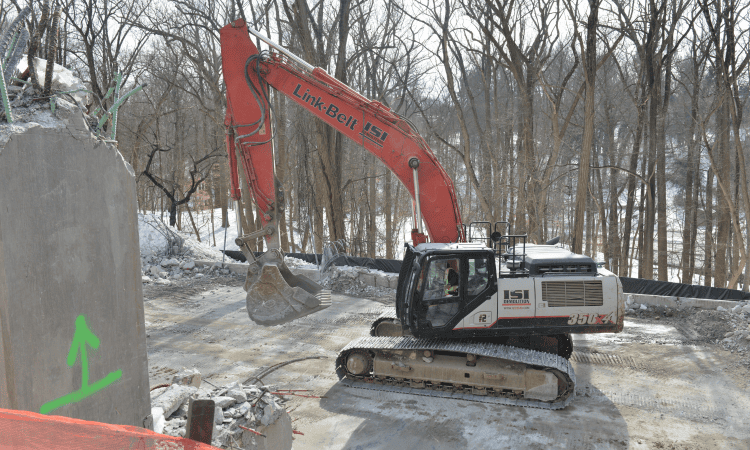
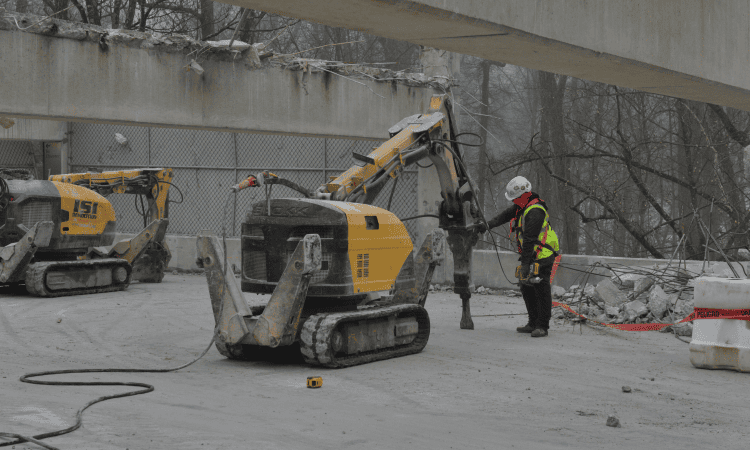
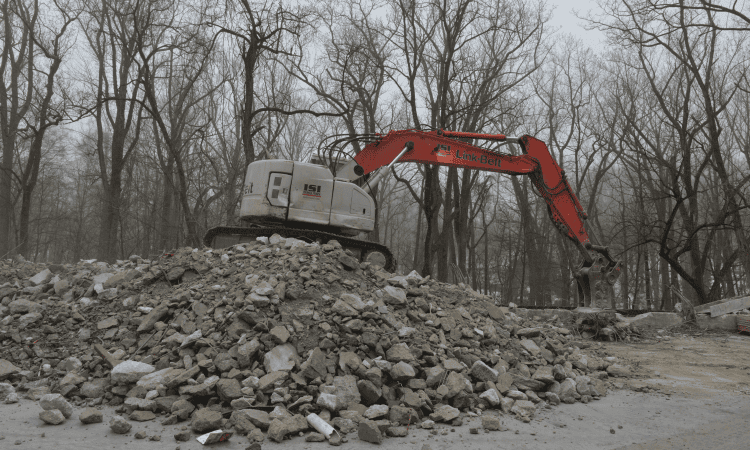
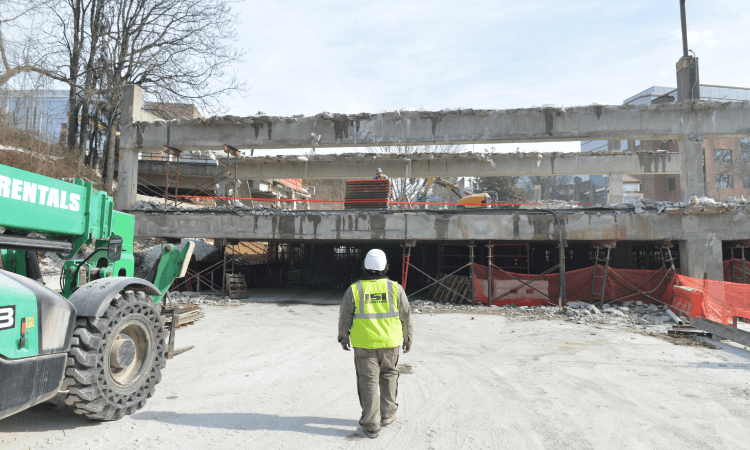
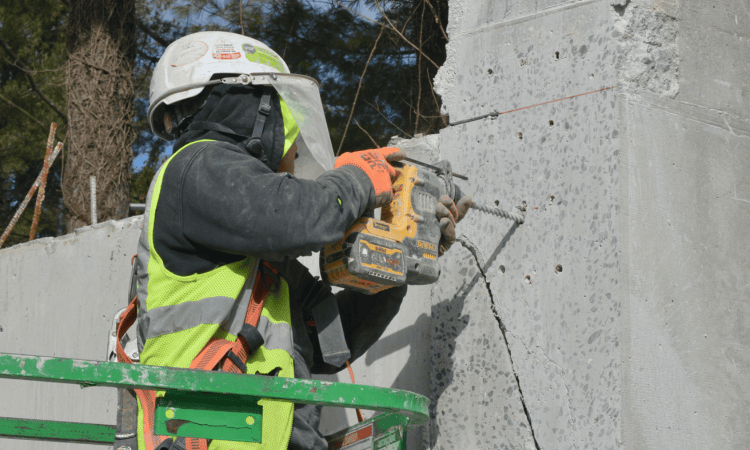
Once the structure was shored and stabilized, ISI Demolition deployed a full equipment fleet suited to the conditions. Robotic demolition units broke down structure in tighter, higher-risk areas where standing alongside heavy machinery wasn’t an option. Excavators and skid steers handled material movement and the heavier breakdown work across the site. For the finest work, crews turned to hand tools, drills, and cutting torches to sever rebar and finish sections cleanly.
“You don’t get much room for error on a post-tensioned structure like this. Every phase, from detensioning through the final cut, had to happen in the right order and the right way, and that’s what this project really came down to: precision, sequencing, and not missing a step.”
-Cody Torrence, Director, Wrecking Division, ISI Demolition
Shoring to Protect Adjacent Infrastructure
The garage sat next to an active roadway that had to remain open and safe throughout demolition. Shoring and bracing work protected that road for the full duration of the project, allowing traffic to continue moving alongside an active demolition site without disruption. CP&R engineered and installed the shoring towers supporting the detensioning work, while ISI Demolition’s in-house structural engineering team handled wall bracing design and equipment load rating calculations for the surrounding demolition work, keeping the two scopes tightly coordinated.
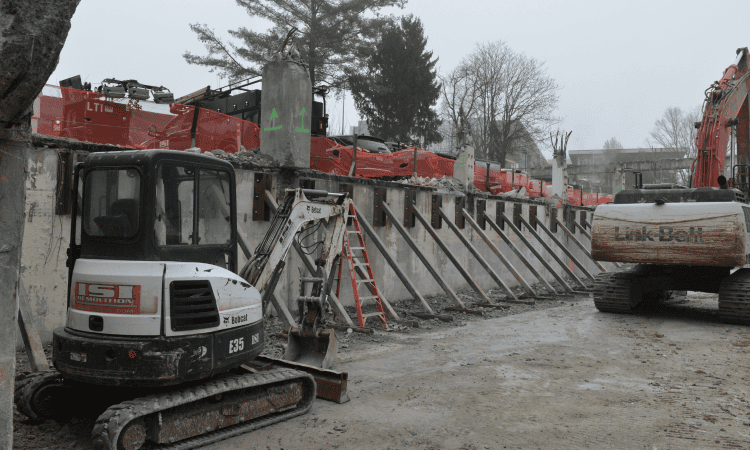
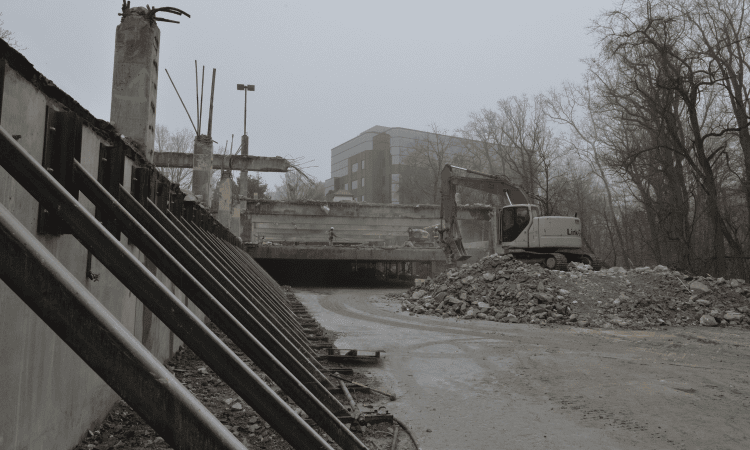
Having structural engineers in-house gave ISI Demolition’s team direct, real-time input. As field conditions shifted, ISI could adjust its own wall bracing and equipment load ratings, without waiting on outside review and revised drawings for that piece of the scope.
That responsiveness, combined with close day-to-day coordination with CP&R’s shoring and detensioning work, kept the project moving and gave the team more control over schedule and safety decisions as demolition progressed.
Saw Cutting for What Stays Behind
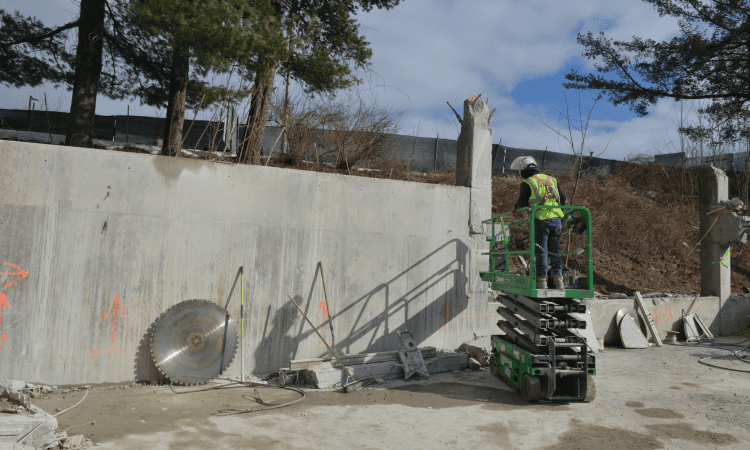
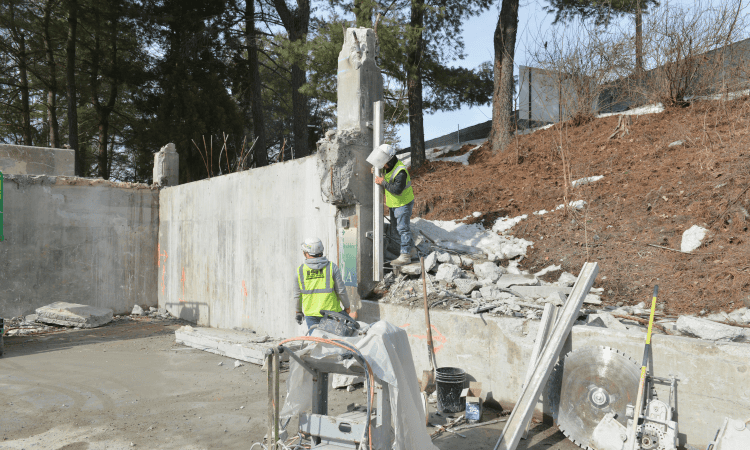
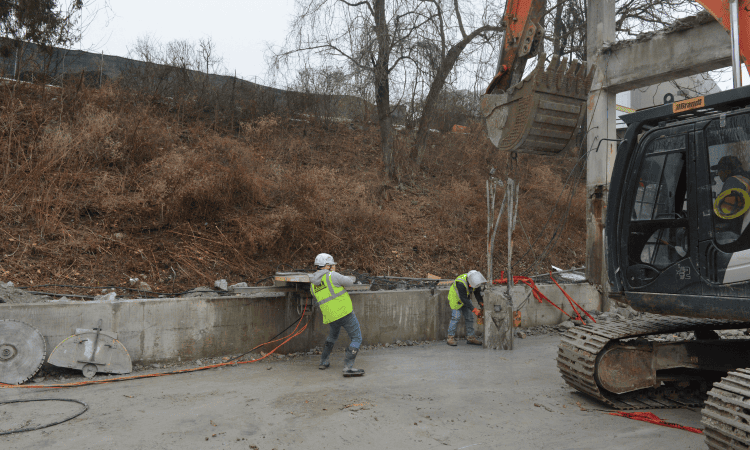
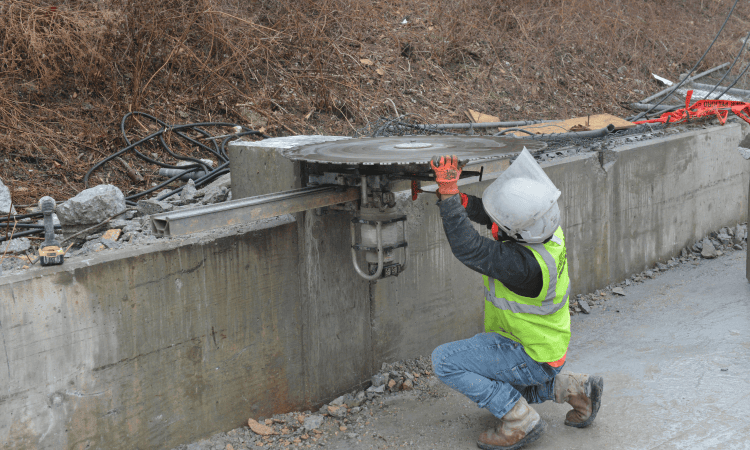
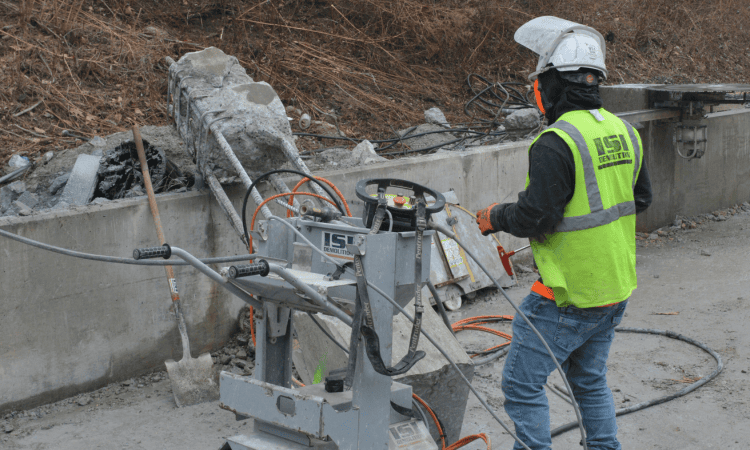
Not every part of the garage came down. A number of structural posts are remaining in place as part of the site’s future as a surface parking lot. This meant saw cutting and track saw work had to produce clean, precise lines rather than the rougher cuts acceptable when a structure is coming down in full. That distinction, between demolishing a structure and selectively preserving parts of it, is where saw cutting expertise carries the most weight.
Working Through Winter Conditions
Much of the project ran through an unusually harsh stretch of Maryland winter in early 2026, with cold temperatures lingering longer than typical for the region. Crews maintained full PPE and harness protocols throughout, holding safety standards steady regardless of weather.
Material Handling and Reuse
Crews removed 12,900 tons of concrete over the course of the project. All of it was crushed and processed in-house rather than trucked offsite for third-party disposal, with material from the site becoming available as crushed concrete for future projects. Twenty-one percent of the project’s work went to minority business enterprise participation. The project ran November 2025 through April 2026.
Bringing It All Together
The Daffodil Garage came down the way it went up: methodically, with careful engineering and close coordination between trades guiding every phase from the first cable release to the last section of concrete. In-house structural engineering, robotic demolition, saw cutting, and material processing worked alongside CP&R’s shoring and detensioning expertise, and that coordination kept the project moving through a demanding schedule and a hard winter. It’s the kind of full-scope execution that’s kept ISI Demolition ranked among the top demolition firms in the country.
Ready to Talk About Your Next Project?
ISI Demolition has worked with construction managers, owners, and developers on demolition projects of every size and scope across Maryland, DC, Virginia, Delaware, Pennsylvania, Florida, and the broader Eastern US since 1990. Let’s talk about what your project needs.
Frequently Asked Questions
What does it mean to detension a parking garage before demolition?
Many parking structures use post-tensioned concrete, where steel cables inside the concrete are pulled tight to add strength. Before that concrete can be safely demolished, those cables have to be carefully released to prevent sudden or uncontrolled structural failure.
Why use robotic demolition equipment instead of heavy machinery alone?
Robotic units allow crews to work with precision in tight or higher-risk areas where standing beside larger equipment isn’t practical or safe, giving greater control over exactly what comes down and what stays intact.
How does saw cutting differ when part of a structure needs to remain in place?
When elements of a structure, like structural posts, are staying in place after demolition, saw cutting has to produce clean, precise lines rather than the rougher cuts used when a structure is being removed in full.